Procedural City Generator
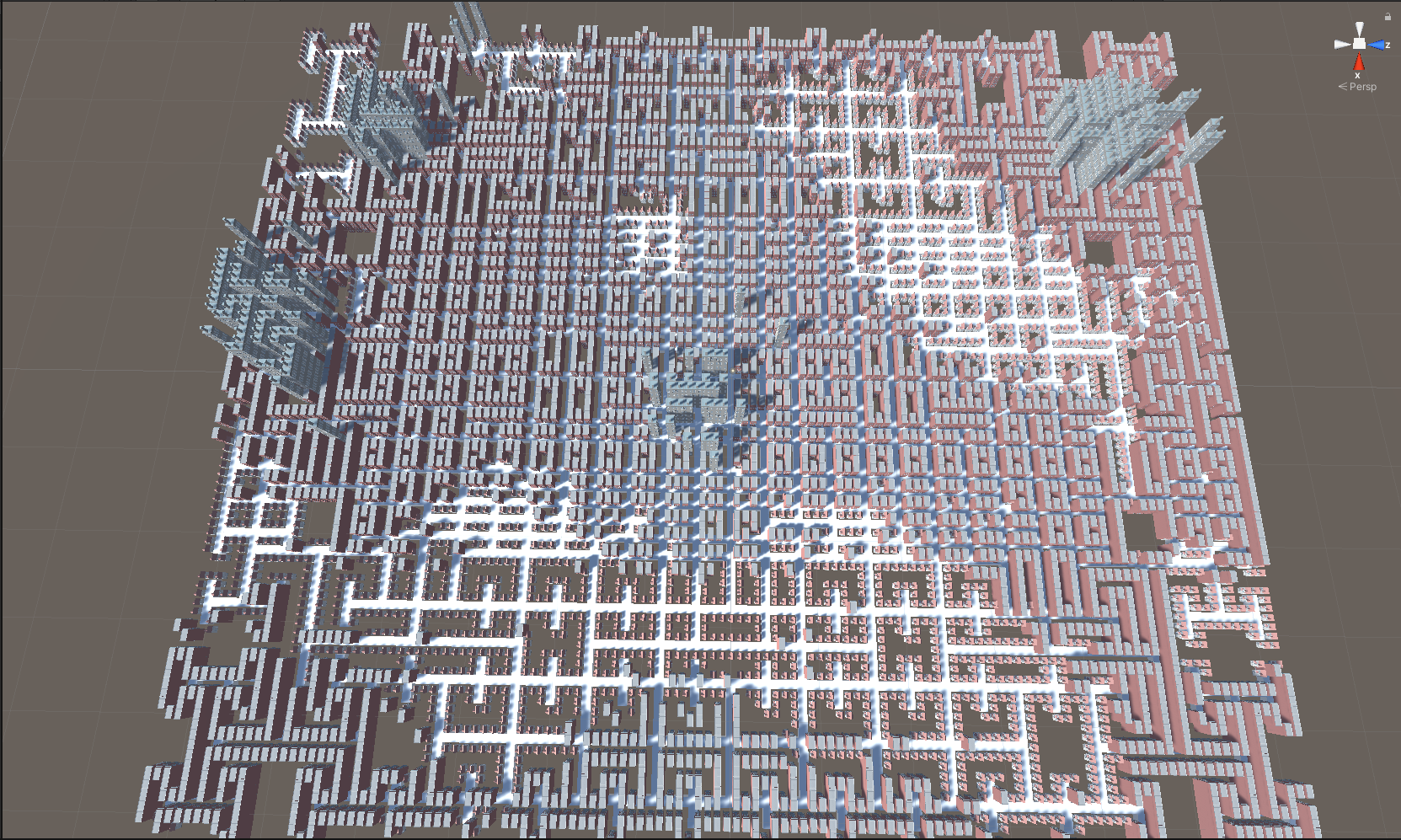
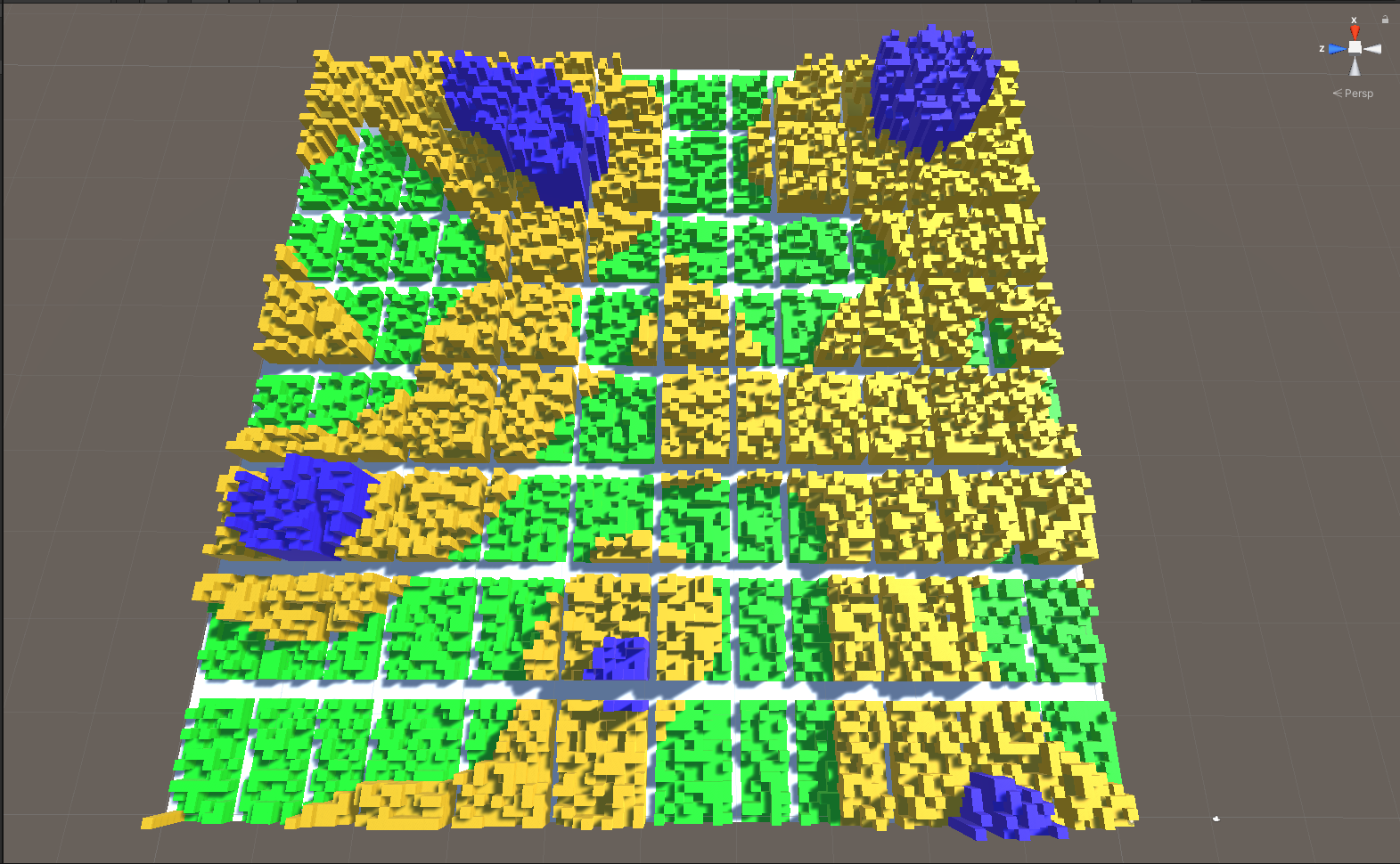
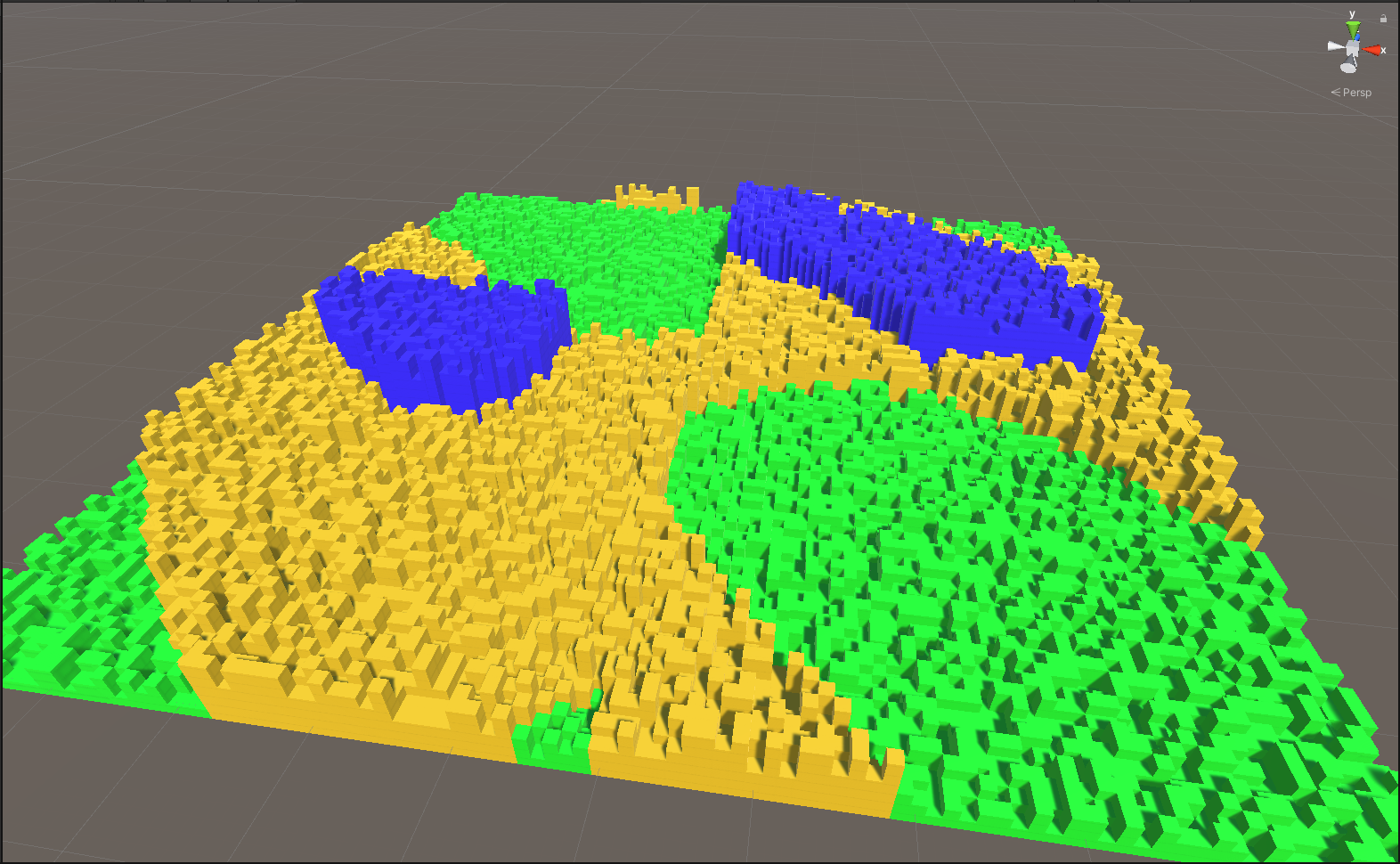
This dissertation puts forward the case of using Procedural Generation over the use of artists when it comes to creating a city. One of the most time and resource consuming aspects for any game development is the creation and layout of complex structures. This dissertation looks at several Procedural Generation techniques along with a summary of related works on this subject. The project presents and evaluates the results of when three of these are implemented into a system. These are Perlin Noise, L-Systems and the author’s own procedural generation algorithm.
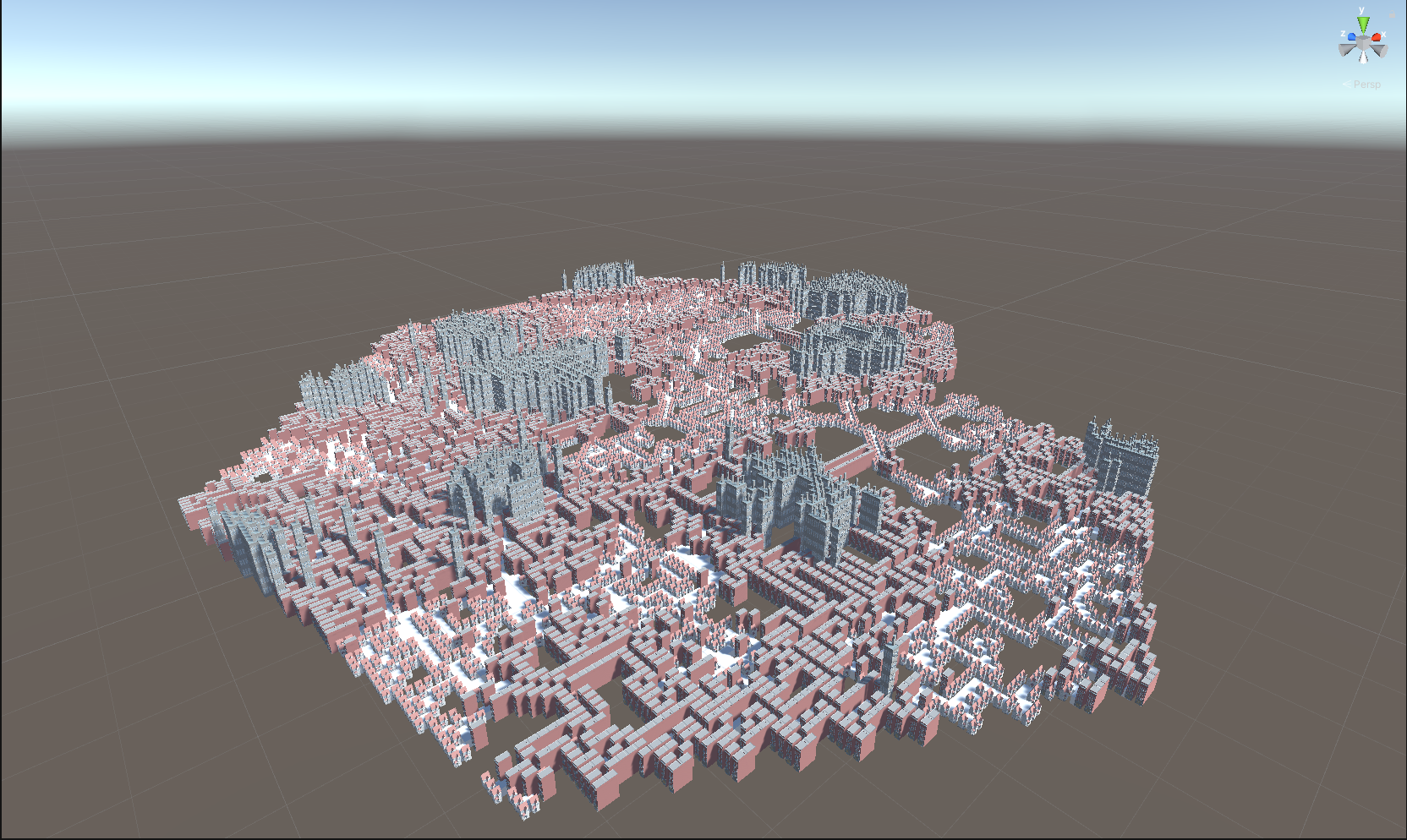
City generated using both L-Systems (at 60 degrees) and Perlin Noise
The motivation for this project originally stemmed from a love of playing open world and city builder games such as GTA V and City Skylines. The ultimate intention is to comprehend how one might create a city generator where the user can design their own bespoke city, using a set of inputs, boundary conditions and rules, which could be exported into their own project and assist in the development process.
The dissertation also makes an assessment of whether increases in user input can lead to a more creative and visually appealing outcome.